

A practical analysis of the pillars of branding and their integration with marketing strategies.
If you're a micro or small business owner, CEO or CMO, you've certainly heard of branding. But what does it mean to apply branding in practice? And how does it differ from marketing, which is already widely explored? In this article, we'll unravel the nuances of branding and demonstrate, in a clear and practical way, how this approach can transform the way you connect with your audience, build communities and generate sustainable results for your business.
Marketing vs. Branding: A New Perspective
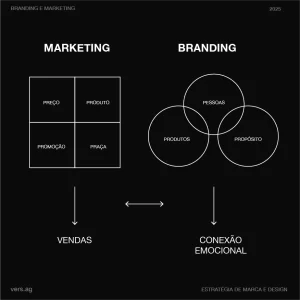
For decades, marketing was synonymous with strategies that revolved around the 4Ps: Price, Product, Promotion and Place. This approach, based on managing value from the offer, worked well to highlight products and drive sales. However, it often neglects a fundamental dimension: the essence and worldview of the brand.
Branding goes further. It's about building value from a world view that involves products, people and purpose. As Martin Neumeier points out in his works, branding is not just about what you sell, but why you sell it. It's about captivating and involving the public by creating an emotional connection that transcends commercial transactions.
The Three Pillars of Branding: Products, People and Purpose
To understand branding in practice, you need to understand the three pillars that support it:
- Products: They are the embodiment of your brand's vision of the world. More than simply offering quality and innovation, products aligned with your brand values contain the promise you want to convey to your audience.
- People: Your audience is not just your customers. It includes employees, partners, suppliers and even the community around the business. Engaging these people means creating a network of authentic connections, which translates into loyalty and a shared identity.
- PurposeAt the heart of branding is the brand's purpose. This purpose needs to be genuine, reflecting the positive impact the brand wants to have on people's lives and on society. By defending a clear and consistent purpose, the company not only strengthens its position in the market, but also inspires its stakeholders to be part of this journey.
Branding and Marketing: a strategic synergy
Many may think that branding and marketing are separate or even opposing disciplines. In fact, they go hand in hand. Branding builds the foundation, defining the brand's identity, values and positioning. Marketing, on the other hand, is the tool that takes this identity to the market, promoting products and services and generating the desired results.
Philip Kotler, one of the greatest references in marketing, points out that branding is the soul of the business while marketing is the engine that drives sales. This synergy encourages the creation of more authentic and coherent campaigns that resonate with the public in a lasting way.
Applying Branding in a Practical Way
For those who already have some theoretical knowledge about branding, the next step is to understand how to apply it concretely in the day-to-day running of the company. Here are some practical suggestions:
- Reassess your identity: Review your company's mission, vision and values. Make sure they are aligned with the reality of the market and that they clearly communicate the value proposition to your audience.
- Create Authentic Communication: Use natural language that reflects your personality, sometimes relaxed, sometimes inspiring, but always with the aim of teaching and engaging. Communication must be consistent at all points of contact (website, social networks, events, etc.).
- Build a Community: Think beyond selling the product. Invest in building a close relationship with your customers, employees and partners. This will strengthen the community around the brand and encourage the spontaneous propagation of its values.
- Try it and adjust: Branding is a continuous journey. Test different approaches, collect feedback and adjust your strategies according to your audience's response. Flexibility and the ability to adapt to the market are essential components of successful branding.
Branding goes far beyond creating a beautiful image or developing a catchy slogan. It is a strategic process that involves self-knowledge, authenticity and building deep relationships with everyone who is part of the brand's ecosystem. By adopting an approach that values products, people and purpose, you not only differentiate your business, but also create a strong and cohesive organizational culture.
Now the question is: how can you apply these principles in your daily life? Start by revisiting the essence of your brand and rethinking the way you connect with your audience. After all, true value lies in the authenticity of the relationships you build and this is the first step towards transforming your business.

 EN
EN  PT
PT  ES
ES