

Find out why the brand is your company's most valuable asset. Understand the concept of brand equity, how it impacts SMEs and how to build a strong and lasting brand.
What is Brand Equity and why does it matter for your company?
When we talk about brand valueWe're not just talking about a well-designed name or logo. We're talking about brand equityThis is the additional value that a recognized and trusted brand adds to a product or service.
O brand equity goes beyond functionality: it's about perception, reputation and emotion. It's what explains why a customer agrees to pay more for a different version of the same product simply because they trust or identify with the brand.
The brand value is the financial translation of this perception. It measures how much consumers value a brand over its competitors, taking into account factors such as recognition, perceived quality and positive associations.
The 5 dimensions of Brand Equity according to David Aaker
David Aaker, one of the leading brand theorists, defines the brand equity is made up of five pillars:
- Brand loyalty
- Name awareness
- Perceived quality
- Brand associations
- Other brand assets (patents, trademarks, etc.)
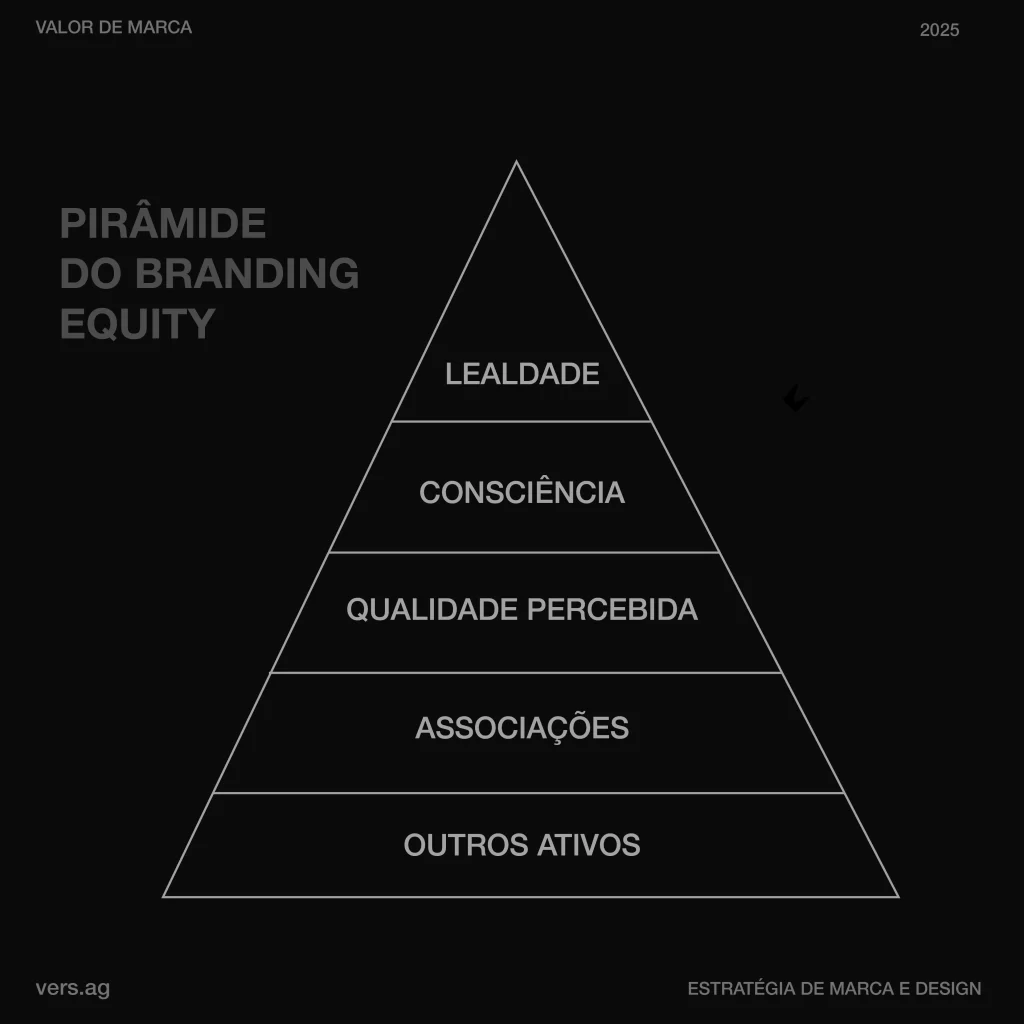
This structure shows that branding is strategy, not aesthetics. It is built up in people's minds and translates into real competitive advantage.
The importance of branding for small and medium-sized enterprises (SMEs)
In SMEsThe impact of the brand can be even greater than in large corporations. That's because small companies can't just compete on price or efficiency - they have to compete on perceived value.
While products and services are becoming increasingly similar, the brand is what makes a company unique. A strong brand:
- Attracts attention in saturated markets.
- It generates trust and bonds with customers.
- It increases the consumer's willingness to pay more.
- Increases the chances of repurchase.
Culture and brand: the invisible link
Another essential point is organizational culture. Companies that align their culture with brand values are able to deliver authentic experiences, reinforce recognition and create deeper connections.
This alignment also attracts talent, stimulates innovation and protects reputation in the long term.
Brand is what remains when everything changes
Technology changes. Trends change. Competitors change. But the brand remains.
She is responsible for
- Differentiating in competitive markets.
- Sustaining premium prices without losing customers.
- Create long-term loyalty.
- Protecting in times of crisis.
- Attracting investment and strategic partnerships.
👉 The operation sustains the present. But it is brand that builds the future.
How to build a strong brand
Investing in a brand is not an aesthetic luxury, it's a growth strategy. To build a solid brand, you have to:
- Recognition: be remembered and easily identified.
- Experience: offer consistency at all points of contact.
- Purpose: convey relevance and clear values.
- Communication: speak authentically and coherently.
- Internal alignment: have a culture and team aligned with the brand's identity.
Conclusion: the invisible value that sustains growth
O brand equity connects perception to financial results. It turns trust into revenue, reputation into loyalty and purpose into sustainable growth.
While operational metrics measure performance, the brand equity measures influence. And it is precisely this influence that keeps a company relevant, even in ever-changing markets.
At the end of the day, a brand is what stands the test of time. It's what builds legacies.

 EN
EN  PT
PT  ES
ES